
Booking a Caribbean vacation comes with visions of crystal-clear turquoise water lapping gently against pristine white sand. But if you have been monitoring travel forums or reading recent reviews from the Dominican Republic, you have likely seen panicked photos of something entirely different: massive piles of brown, smelly seaweed completely blocking the shoreline.
This is sargassum, a naturally occurring, floating macroalgae that blooms in the deep Atlantic and is pushed directly into the Caribbean by shifting ocean currents.
While it is completely harmless to humans and serves as a vital habitat for marine life out in the open ocean, it creates a massive logistical nightmare when tons of it wash up on luxury resort beaches.
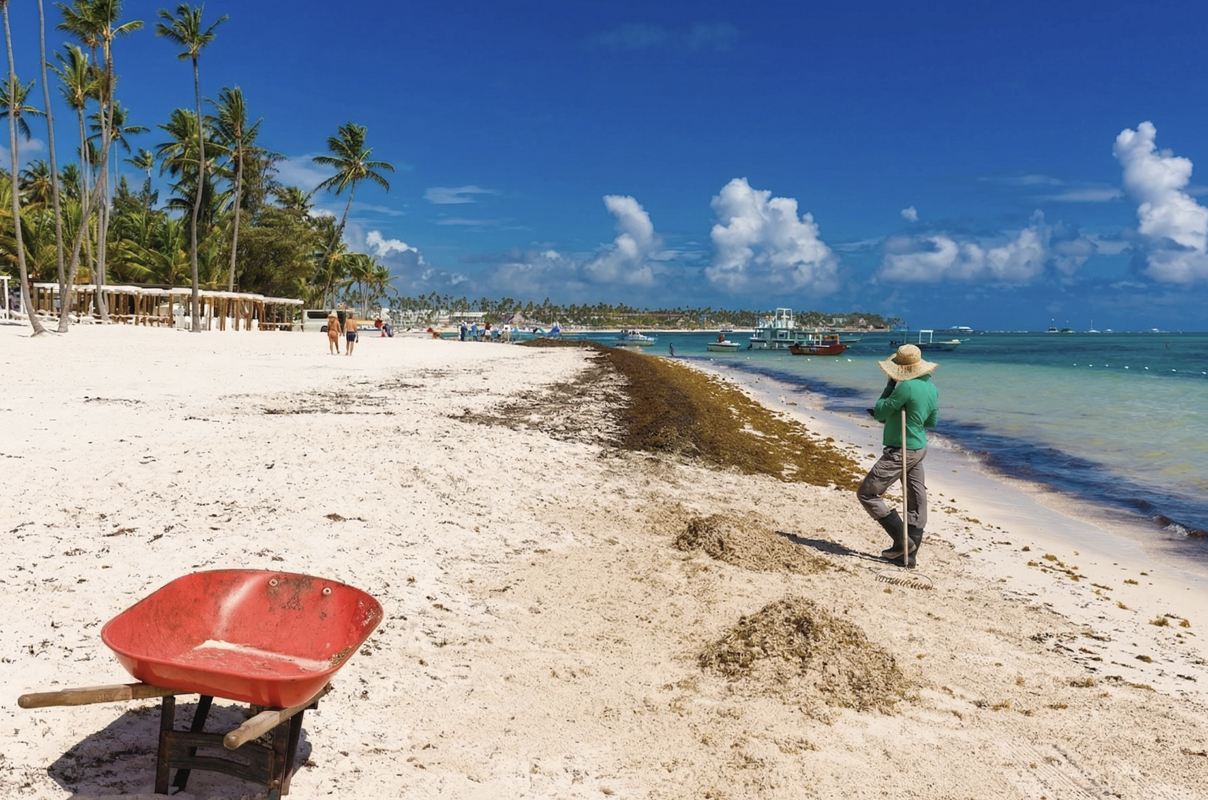
Navigating the seaweed season requires a bit of strategic planning and setting the right expectations. As we look at the oceanography reports for 2026, the Caribbean is bracing for a highly active sargassum year.
Here is everything you need to know about the upcoming season and exactly how to ensure your vacation remains spectacular, regardless of what washes ashore.


The 2026 Seaweed Forecast
- The Early Arrival: Historically, the heaviest seaweed accumulations in Punta Cana hit during the peak heat of summer, running from May through October. However, satellite tracking in 2026 is showing major blooms forming in the Atlantic much earlier than usual, pushing the start of the heavy season well into the spring months.
- The Volume Prediction: Oceanographers are monitoring a massive sargassum belt stretching across the ocean, predicting that 2026 could be a significant “stress test” for Caribbean coastlines. The volume of incoming algae is expected to be heavy, making daily cleanups a massive challenge.
- The Unpredictability: It is crucial to understand that sargassum is entirely dependent on daily wind and tide patterns. A beach that is completely choked with seaweed on a Tuesday can be perfectly clear and swimmable by Thursday if the ocean currents shift overnight.

The Geography of the Problem
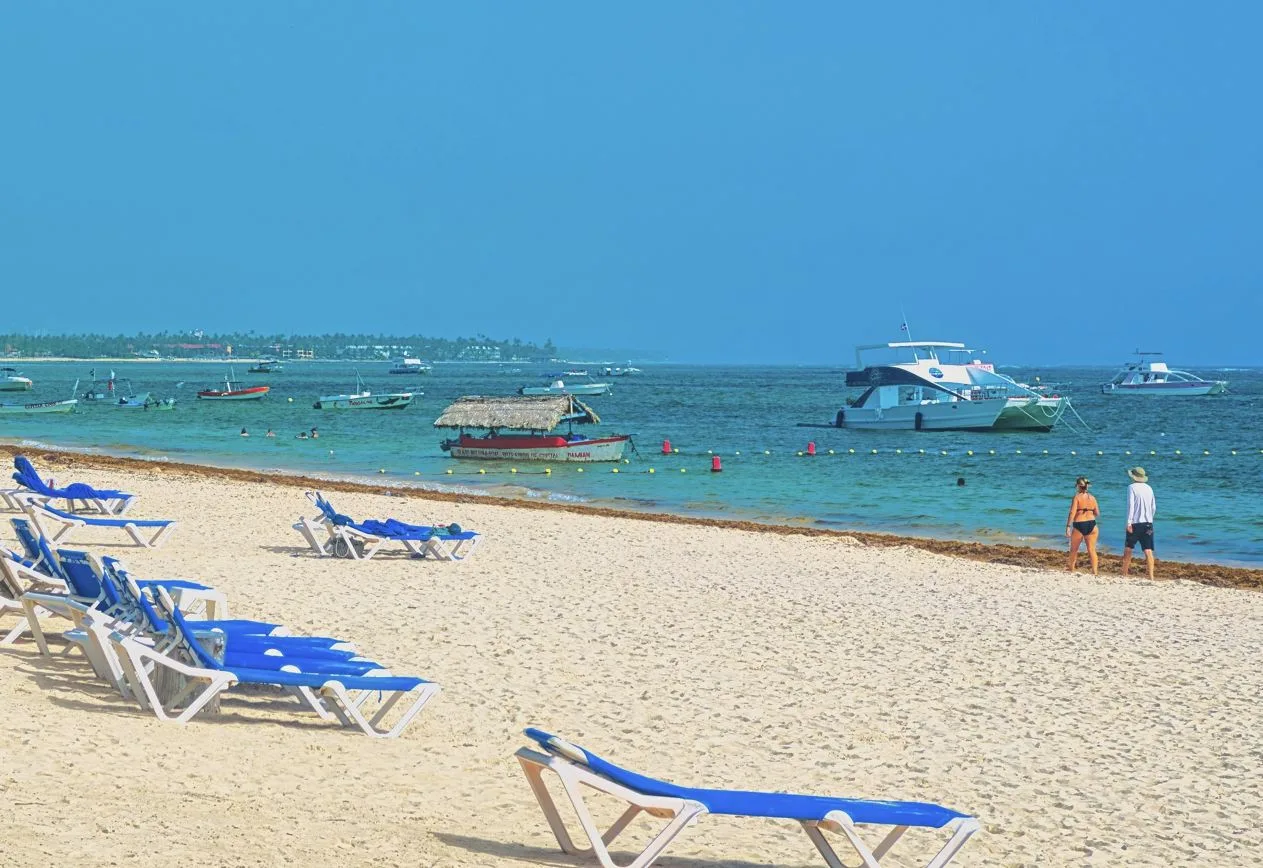
Not all beaches in the Dominican Republic are impacted equally. The geography of the coastline plays the biggest role in determining where the seaweed lands.
- The Hardest Hit Zones: The most famous resort corridors, including Bávaro Beach, El Cortecito, and Cabeza de Toro, face directly east. This means they catch absolutely everything the Atlantic currents throw at them, bearing the brunt of the heavy sargassum waves.
- The Sheltered Escapes: Beaches that face south or are protected by natural reef barriers fare much better. The luxury enclave of Cap Cana, particularly around Juanillo Beach, typically sees significantly less seaweed.
- The Ultimate Pivot: If a pristine, guaranteed clear-water beach is the absolute top priority for your 2026 trip, you need to look away from Punta Cana entirely and book a resort in Bayahibe. Located on the southern, Caribbean-facing coast of the island, this area is geographically shielded from the massive Atlantic sargassum currents.

How Mega-Resorts Are Fighting Back
The hospitality industry in the Dominican Republic relies entirely on beautiful beaches, and they are spending millions of dollars to mitigate the sargassum crisis.
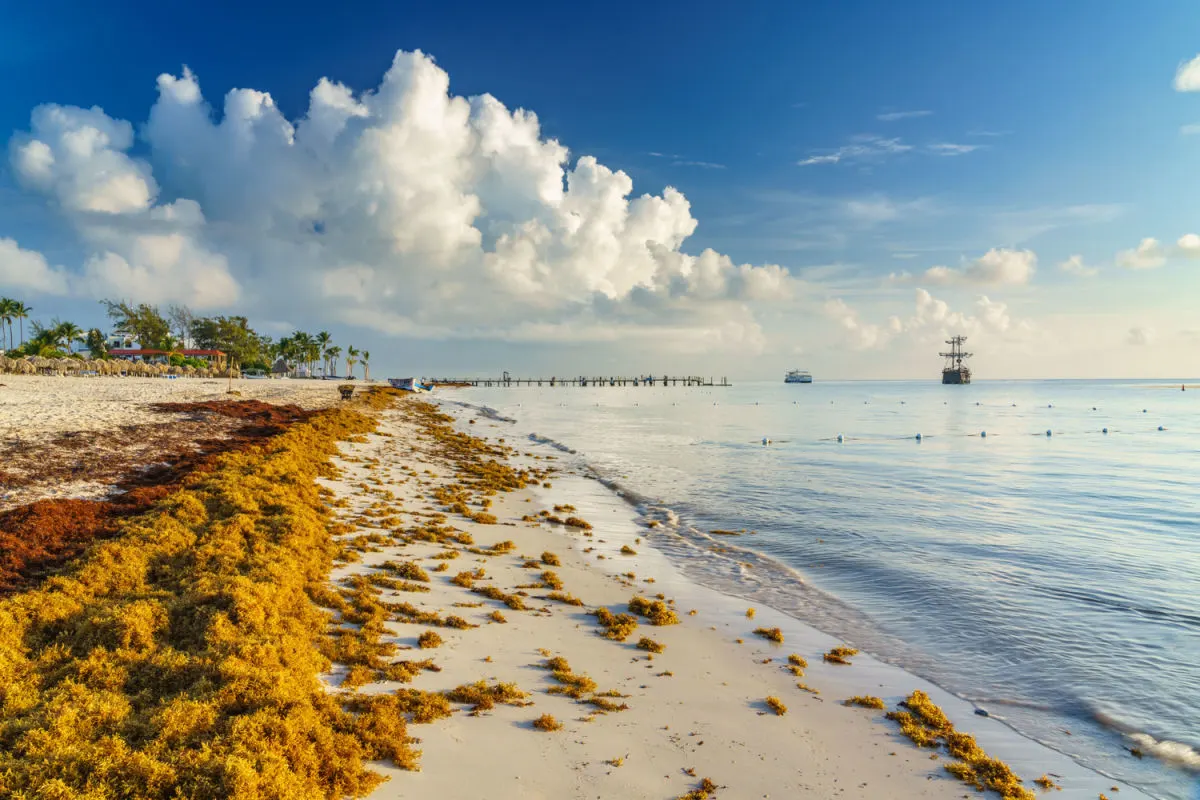
- The Offshore Barriers: Many premium 5-star properties have installed massive floating nets anchored hundreds of yards offshore. These barriers catch the floating sargassum mats before they ever reach the swimming zones, allowing specially designed boats to harvest the seaweed out in deep water.
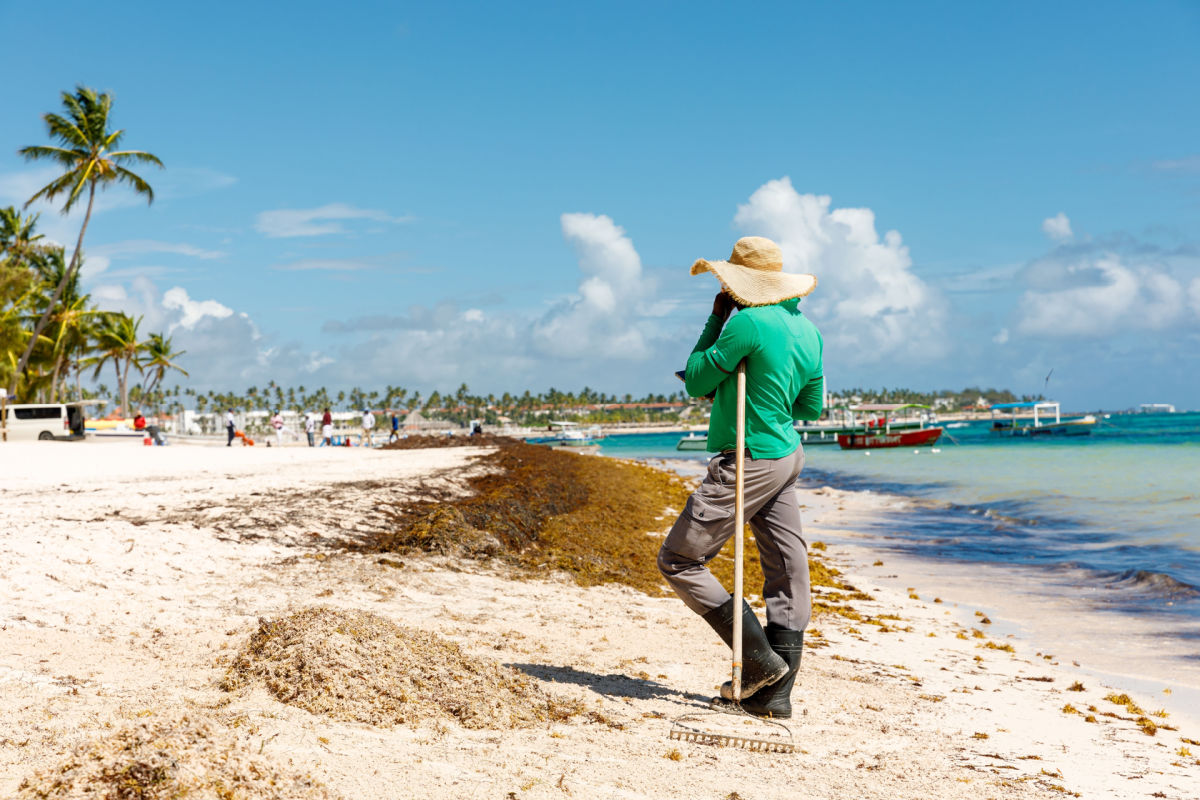
- The Dawn Patrol: Resorts employ massive teams of groundskeepers equipped with specialized tractors and rakes who hit the sand long before the sun comes up. Their goal is to have the overnight accumulation completely cleared and buried by the time guests finish their morning coffee.
- The Pool Factor: To compensate for the unpredictable ocean conditions, resorts are aggressively upgrading their interior amenities. You will notice massive investments in sprawling waterparks, luxury cabana clubs, and premium swim-up bars designed to keep guests happy even if the beach is temporarily unswimmable.
The Smart Traveler’s Strategy
A heavy sargassum day does not mean your vacation is ruined. It just requires a slight pivot in your itinerary.
- Book a Boat Trip: The absolute best way to beat the seaweed is to simply float right over it. Booking a shared catamaran excursion or a private yacht charter takes you out to the pristine, offshore sandbars and vibrant coral reefs where the water is always clear and perfect for snorkeling.
- Explore the Interior: Use a heavy seaweed day as an excuse to leave the resort bubble. The Dominican Republic boasts incredible inland adventures, from zip-lining over the jungle canopy in Anamuya to swimming in the crystal-clear, ice-cold freshwater cenotes hidden in the Scape Park.
- Adjust Your Mindset: The ocean is a wild, living ecosystem, not a chlorinated swimming pool. By packing a flexible attitude and utilizing the incredible resort pools when the shoreline is compromised, you can easily bypass the frustration that ruins so many other tourists’ trips.
Seaweed Survival Guide
Riding the Wave
The 2026 sargassum season is going to require patience from everyone traveling to the Caribbean. While the eastern coast of the Dominican Republic will undoubtedly face heavy seaweed influxes this summer, the local resorts are better equipped than ever to handle the cleanups.
By understanding the geography, utilizing offshore excursions, and adjusting your expectations, you can still have an unforgettable, five-star experience in Punta Cana.
Subscribe to our Latest Posts
Enter your email address to subscribe to Dominican Republic Sun’s latest breaking news affecting travelers, straight to your inbox.