
If you are currently sitting on a beach chair in Bavaro, or scrolling through live webcams preparing for your trip next week, you might be asking yourself a very confusing question: “Wait, isn’t the seaweed supposed to be gone by now?”
You aren’t imagining things. And no, you aren’t just having bad luck.
Historically, the “golden window” for Punta Cana beaches is November through April. This is when the water is supposed to be glass-calm and crystal clear, with the notorious Sargassum seaweed staying dormant until the summer heat kicks in.


But here at Dominican Republic Sun, we track the beach conditions daily, and January 2026 is breaking the rules. We are seeing a noticeable surge in seaweed washing ashore during a month that is usually pristine.
Before you panic and try to rebook your flight, here is the lowdown on why the ocean is acting up this winter, and exactly how it affects your vacation plans.

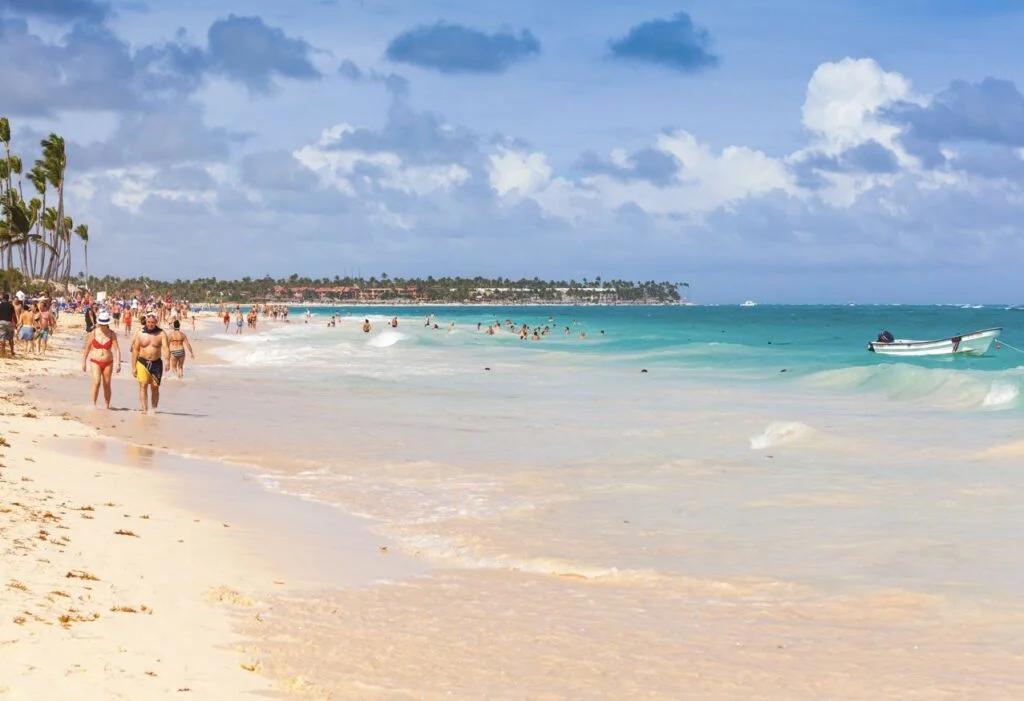
The “Endless Summer” Effect
We won’t bore you with a complex marine biology lecture, but you need to understand the basics to manage your expectations.
Usually, the massive “Atlantic Sargassum Belt” dies down in the cooler months. The algae sinks or drifts away, leaving the Caribbean coast clear. But late 2025 was different. The Atlantic Ocean experienced record-breaking water temperatures that extended well into November and December.
Essentially, the “season” never fully ended. The warm water acted like a greenhouse, keeping the algae alive and blooming when it should have been hibernating. Instead of dissipating, the belt just hung around, waiting for a push.


The Wind Betrayal (NAO)
That “push” is the second piece of the puzzle. Researchers call it the North Atlantic Oscillation (NAO). In plain English? It’s the wind and pressure patterns.
In a normal winter, the currents naturally keep whatever seaweed is left further out in the deep Atlantic. This year, strong easterly winds are driving those currents directly toward the Dominican Republic coastline. It is creating a funnel that is delivering the seaweed straight to the east-facing beaches of Bavaro and Uvero Alto.


What This Means For Your Trip (Right Now)
Let’s take a deep breath. We are not talking about the catastrophic “Red Alert” levels we see in July, where the water turns brown and the smell is overpowering.
This is a “winter surge,” which is different.
- The Shoreline: You will likely see a line of brown seaweed on the sand each morning. The resorts are out with tractors at 6:00 AM clearing it, so by 10:00 AM, the sand is usually clean.
- The Water: You might encounter floating patches while swimming. It’s not a solid wall of algae, but it’s not the crystal-clear “pool water” you see in the brochures.
- The Visual: It looks a bit messier than a standard January, but it is still very swimmable for most people.


🌿The Reality Check
Plan It Perfectly
Find out the best time of year to visit with our Dominican Republic trip planner tool.
Launch Planner ToolPro-Tip: How To Escape It
If you are a total beach snob (and we say that with love) who refuses to touch a piece of seaweed, you have options.
Since this surge is being driven by easterly winds, the East Coast (Punta Cana/Bavaro) takes the hit. The Caribbean Coast (South) is naturally protected.
If you haven’t booked yet, or if you are looking for a day trip to escape the algae, look at Bayahibe. Located about 50 minutes south of Punta Cana, Bayahibe faces the Caribbean Sea. The water there is currently clearer and calmer because the island itself blocks the drift.


The Bottom Line
This surge is an annoyance, not a vacation-killer. The pools are still perfect, the rum is still cold, and the sun is still shining.
However, this is a reminder that nature is changing. The “safe windows” we used to rely on are shrinking. Checking the conditions before you fly is now a mandatory part of the planning process.
Want to see exactly when the clear water historically returns? Check our seasonal breakdown tool to plan your next window. Looking for a resort with massive pools just in case? Find Your Perfect Resort in Seconds
Subscribe to our Latest Posts
Enter your email address to subscribe to Dominican Republic Sun’s latest breaking news affecting travelers, straight to your inbox.