
If you are planning a trip to Punta Cana this summer, the arrival of sargassum seaweed is likely your biggest concern. The Dominican government knows this, and they are officially going on the offensive before the peak season hits.
To protect the beaches ahead of the busy summer season, the highest levels of the Dominican government just officially green-lit a massive new island-wide plan to tackle the seaweed problem head-on.
But while the official press releases are full of bureaucratic language about “sustainable management” and “economic growth,” travelers really only care about one thing: How are they actually going to keep the beaches clean?
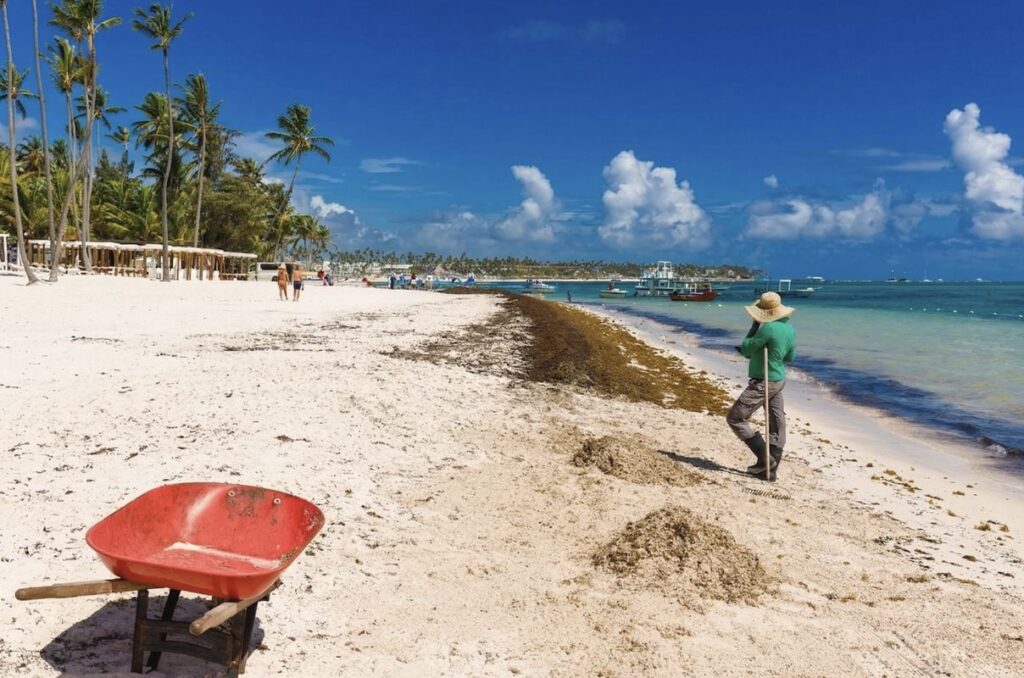
Here is a look behind the scenes at exactly how Punta Cana is executing this new cleanup plan, and what it means for your upcoming vacation.
The Three-Tiered Defense System
When the Dominican government talks about new collection guidelines, they are actively funding and standardizing a massive, physical defense network. Keeping the coast of Punta Cana clear of seaweed requires a relentless, 24/7 operation.


Here is exactly how the resorts and the government are stopping the seaweed before it ruins your beach day:
1. The Offshore Blockade The first line of defense happens before the seaweed ever touches the sand. Major resorts and local authorities deploy miles of specialized floating barriers—often called containment booms—anchored a few hundred yards off the shoreline. These nets act like a massive fence, catching the bulk of the floating sargassum while still allowing fish and marine life to swim underneath safely.

2. The “Sargassero” Fleet Once the seaweed is trapped by the offshore barriers, it has to be removed quickly before it sinks or washes over the top. This is where specialized collection boats come in. These “sargassero” vessels drive along the barrier line, using massive conveyor belts to scoop the floating seaweed directly out of the water and haul it away.
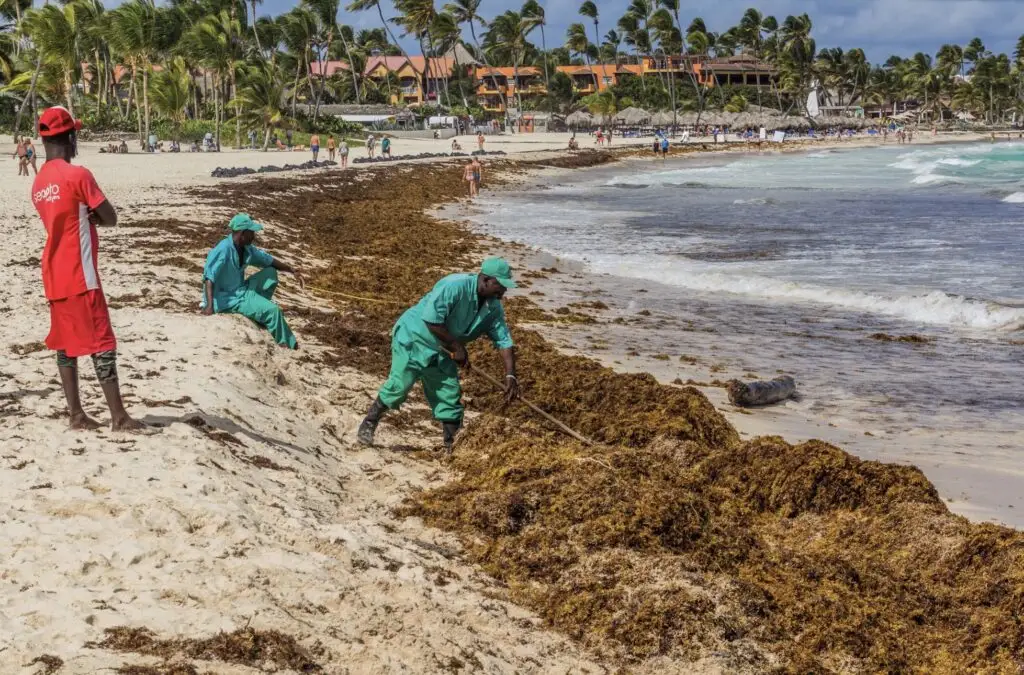
3. The 6:00 AM Ground Assault No barrier system is 100 percent perfect, and some seaweed will inevitably slip through to the shore. To handle this, the resorts employ armies of local workers and specialized tractors equipped with beach rakes. These crews hit the beaches at dawn, long before most tourists have even ordered their first coffee. By the time you walk down to reserve your lounge chair at 8:00 AM, the sand has been swept entirely clean.


What Happens to the Seaweed?
The most important part of the government’s newly approved plan focuses on disposal. In the past, the collected seaweed was often just dumped in massive piles inland, creating awful smells and environmental issues.
The new initiative completely changes how the country handles the waste. The government is creating strict guidelines to turn the collected sargassum into a resource. Specialized facilities are being tasked with converting the tons of hauled-away seaweed into organic fertilizer for local agriculture, biofuel to generate electricity, and even sustainable building materials.


What This Means For Your 2026 Trip
For travelers heading to Punta Cana, this new government initiative is the best news possible. It means the major resort zones are getting more funding, better equipment, and clearer rules to fight the seaweed invasion.
View Live Score Here
While nature is unpredictable, this massive operation ensures that even during a heavy sargassum month, your resort will be fully equipped to defend its beach. If you are traveling this summer, you can expect the water to be aggressively monitored and the sand to be cleared daily, leaving you free to enjoy your vacation exactly as you planned it.
Subscribe to our Latest Posts
Enter your email address to subscribe to Dominican Republic Sun’s latest breaking news affecting travelers, straight to your inbox.