
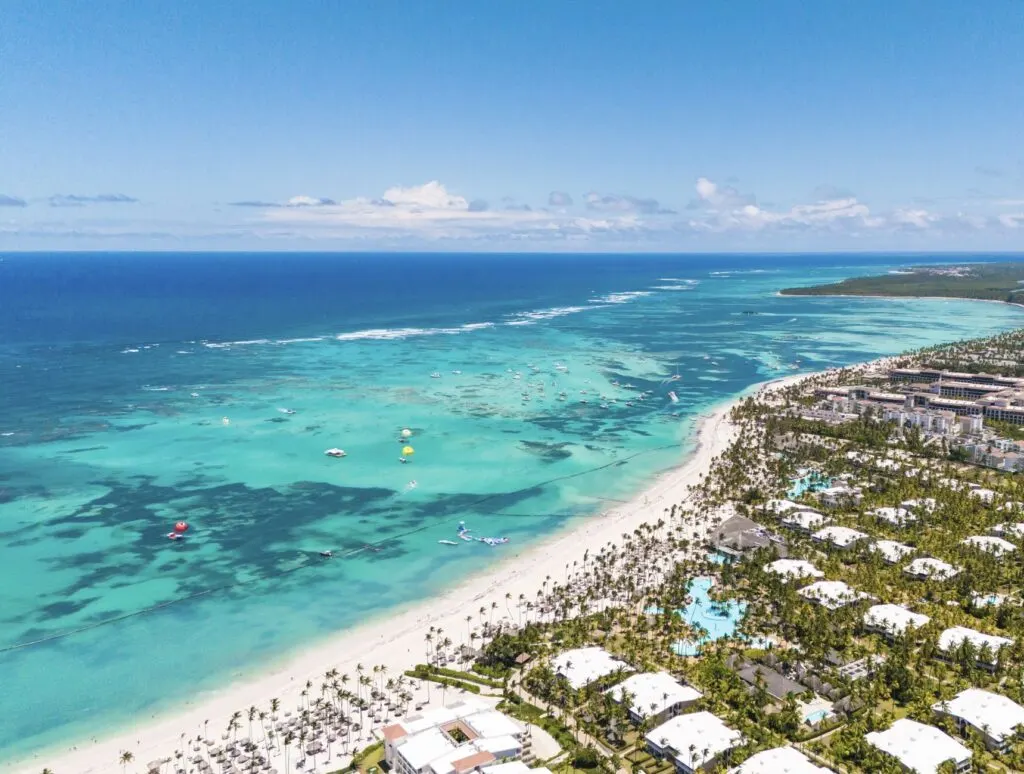
The beaches of Punta Cana are currently sargassum-free, which is a massive win for travelers considering the reports of heavy brown blankets currently hitting Playa del Carmen and Tulum.
While the Mexican Caribbean is already struggling with its first major landfall of 2026, the Dominican Republic’s east coast is holding steady. Here is the breakdown of why the water is still clear in the DR and when you can expect that to change.

The Ground Report: March 16, 2026
As of this morning, ground reports from across the Bávaro and Cap Cana coastlines are overwhelmingly positive. Tourists staying at major resorts like Breathless Punta Cana and Secrets Cap Cana are reporting “pristine” conditions with almost zero seaweed in the water.
Satellite monitoring from the Dominican government (ANAMAR) and private trackers confirm that there is currently no significant sargassum mass within 1 kilometer of the Punta Cana shoreline. While 2026 is forecast to be a “major” sargassum year globally, the prevailing currents are currently pushing the bulk of the Atlantic belt toward the Lesser Antilles and the Yucatan Peninsula, leaving the DR largely spared—for now.

Why Mexico is Getting Hit First
It all comes down to the way the ocean moves. Think of the Caribbean Sea like a giant one-way street. The water flows from the east (near the Dominican Republic) toward the west (toward Mexico).
Because Mexico is at the end of that “street,” all the seaweed floating in the Atlantic gets pushed directly into its beaches first. It’s like a giant pile-up at a dead end.
Punta Cana is on the side of the street. While Mexico catches the full force of the seaweed early in the year, the Dominican Republic’s position usually keeps its beaches clean for much longer. That’s why you’re seeing perfect white sand in Punta Cana right now, while beaches in Tulum are already being buried.


The Forecast: When Will It Hit Punta Cana?
Don’t get too comfortable. While the water is perfect today, the 2026 forecast from the University of South Florida indicates that sargassum levels in the Central Atlantic are already at record highs.
Historically, Punta Cana’s “low season” for seaweed runs from November through March. We are at the tail end of that window. Based on current drift patterns and rising sea temperatures, travelers should expect the following:
- Late March/April: Small “scout” patches will likely begin to arrive. Most resorts will handle these easily with daily morning cleanups.
- May – August: This is the peak window. This is when the heavy landfalls typically hit the DR’s east coast.


Best Seaweed-Free Alternatives
If you are planning a trip for later this spring and want to avoid the gamble entirely, you have three bulletproof options that are historically sargassum-free even when Punta Cana gets hit:
- Bayahibe/Dominicus: Located on the southern coast, these beaches face south/southwest. The currents almost never push seaweed into this area.
- Saona Island: Even on the worst sargassum days in Punta Cana, a boat trip to Saona usually rewards you with crystal-clear water.
- Miches: This newer resort area about 90 minutes north of Punta Cana has a unique coastline orientation that often stays spared during major influxes.
Enjoy It While It Lasts
If you are in Punta Cana this week, you hit the jackpot. The beaches are in peak condition while Mexico is already struggling. Enjoy the clear water now, because by May, the “S-word” will be back in the headlines for the entire Caribbean.
Subscribe to our Latest Posts
Enter your email address to subscribe to Dominican Republic Sun’s latest breaking news affecting travelers, straight to your inbox.