Every day, thousands of Americans and Canadians book flights to Punta Cana, and almost immediately, the anxiety sets in. Someone in the group chat asks, “Wait, is it safe down there right now?” They head to Google, click on a government website, read the warnings, and instantly panic.
But the way we currently assess travel risk is fundamentally broken. We are using broad, geopolitical diplomatic tools to figure out if it is safe to walk from a resort lobby to the beach.


Here is the operational reality of safety in Punta Cana in 2026, and why the travelers currently on the ground are telling a very different story than the government.
The US State Department Time Warp
Right now, the Dominican Republic is under a “Level 2: Exercise Increased Caution” advisory from the US State Department. The official summary warns of violent crime, robbery, sexual assault, and homicide.
If you read that without context, you might cancel your trip. But here is the problem: That advisory was issued on June 12, 2025. It has been sitting there, unchanged, for over eight months. Furthermore, government advisories paint an entire nation with the same brush. An isolated incident in a remote, non-tourist neighborhood of Santo Domingo can trigger an alert that terrifies a family staying inside a heavily guarded, gated mega-resort in Bávaro, 120 miles away.
State Department warnings measure long-term geopolitical risk. They rarely capture the day-to-day reality of the actual tourist experience.
Live Safety Score: See The Data & Share Your Experience
| 📢 Harassment | 1 REPORTS |
| 🖐️ Theft | 1 REPORTS |
The 2026 Reality Check: Live Traveler Data
Travelers don't need political posturing; they need real-time intelligence. What is happening at the resorts right now?
To answer this, we look at the Traveler Safety Index, a real-time sentiment tracker powered by tourists who are actually at the destination.
As of February 2026, Punta Cana is registering a 91 out of 100 Safety Score (Categorized as STABLE). Is it a perfect utopia? No. The live ledger shows exactly 1 recent report of theft and 1 report of harassment. But that is the point—it is an honest, mathematical reality, not a marketing brochure. It cuts through the sensationalized news cycles to show that the vast majority of visitors are experiencing a seamless, secure vacation.

Why Real-Time Sentiment Beats Outdated Warnings
The problem with the old way of researching safety is that it relies on static PDFs. The new data model shifts the power to the travelers. Here is why the live index is a more accurate reflection of the Punta Cana tourist zone:
- Recency Matters: A safety vote cast today carries significantly more weight in the algorithm than a vote cast last month. If the situation changes, the score reacts immediately. It doesn't stay artificially suppressed for a year waiting for a bureaucrat to update a website.
- The "Signal Confidence" Meter: Right now, Punta Cana has a 3-Bar Confidence Rating. This means the 91 score isn't based on three people sitting in a lobby; there is a steady, reliable stream of recent traveler reports feeding the algorithm.
- No Review Bombing: The system uses browser fingerprinting to ensure that only verified, unique users are logging data. You can't spam the system with fake fear campaigns or competitor sabotage.


The Verdict
Government advisories are a necessary baseline, and you should absolutely read them. But they are the worst tool for planning your daily itinerary.
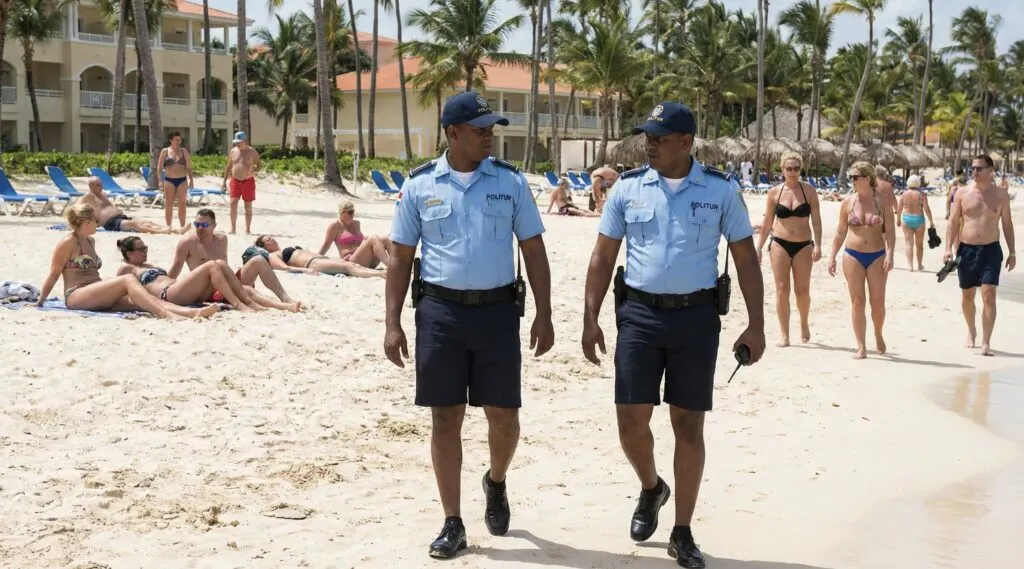
Punta Cana operates as a massive, heavily policed tourist bubble. The local economy depends entirely on your safety, and the security infrastructure reflects that. For the average traveler staying at an all-inclusive resort, the biggest physical threat isn't a criminal gang—it's severe dehydration from drinking too many Mamajuanas in the midday sun.
Don't let an 8-month-old government memo ruin your trip. Look at the live data, practice basic situational awareness, and when you get down there, cast your own vote to help the next wave of travelers. Safe Travels!
Subscribe to our Latest Posts
Enter your email address to subscribe to Dominican Republic Sun's latest breaking news affecting travelers, straight to your inbox.