
The map of tropical travel has completely flipped. For decades, whenever American travelers wanted a guaranteed, top-tier beach vacation, they instinctively booked a flight to Mexico. But the peak summer data shows a massive, unexpected shift. Cancún has experienced a sharp 13% decline in international traffic, processing 200,000 fewer passengers than the previous year. Concurrently, Los Cabos plummeted by 14.2%, with roughly 58,000 expected tourists failing to show up.
So, where is that massive wave of travelers going instead? They are heading straight to the Dominican Republic.

The Dominican Republic just shattered its all-time tourism records, welcoming a staggering 6,616,671 total visitors in the first six months of the year. That represents an 11% jump from 2024 and a 7.7% increase over 2025, put into motion by nearly a million arrivals in June alone. Driven by the explosive popularity of its crown jewel, Punta Cana—which single-handedly swallowed 53% of all flight arrivals into the country—the Dominican Republic is officially on track to hit a historic 12 million visitors by the end of the year.
Here are the 5 real-world reasons Punta Cana is breaking absolute tourism records while Mexico’s heavyweights drop double digits.


The Massive Price Gap
Mexico has grown incredibly expensive for the average traveler. Between the strength of the Mexican peso crushing the purchasing power of the U.S. dollar and resorts aggressively hiking their nightly rates, a vacation to Cancún or Cabo is no longer a casual getaway.
Punta Cana saw this pricing frustration and capitalized on it. The Dominican Republic’s high-density resort infrastructure and fierce competition among major all-inclusive brands have created an unbeatable value proposition. Travelers are finding that they can book a high-end, five-star all-inclusive resort in Punta Cana for the exact same price as a run-of-the-mill three-star hotel in Cabo San Lucas. When a family can make their vacation budget stretch twice as far without sacrificing luxury, the decision to skip Mexico becomes a complete no-brainer.

The Perceived Safety Shield
You cannot talk about the decline in Mexican arrivals without looking at the news cycle. In June alone, a high-priority U.S. Embassy security alert near the San José del Cabo airport and negative headlines regarding criminal activity in Cancún created a wave of public panic, leading to some cancelations.
Punta Cana is winning the market by positioning itself as a secure alternative. The Dominican government has heavily invested in Politur—a highly visible, dedicated tourist police force that strictly insulates the resorts, hotel corridors, and beaches. The strategy is working flawlessly. The country maintained a solid 71% hotel occupancy rate through June, and guest satisfaction scores sit at an impressive 4.4 out of 5. Because travelers feel entirely safe and relaxed on the ground, 92% explicitly state they would return.
The Traveler Safety Index (TSI) score, a real-time rating from 0 to 100 — the higher the number, the safer travelers actually feel on the ground. Currently Punta Cana is at a score of 88 which shows the vast majority of visitors feel safe.
The Frictionless Border Process
While Mexico has certainly invested in modern airport infrastructure and amazing electronic gates, the actual experience of crossing the border has become increasingly stressful. Over the past year, Mexico has made headlines for strictly enforcing rigid entry rules—customs agents slapping heavy taxes on tourists carrying multiple laptops, immigration officers demanding printed hotel vouchers and return flights, and unpredictable reductions in the standard 180-day tourist visa.
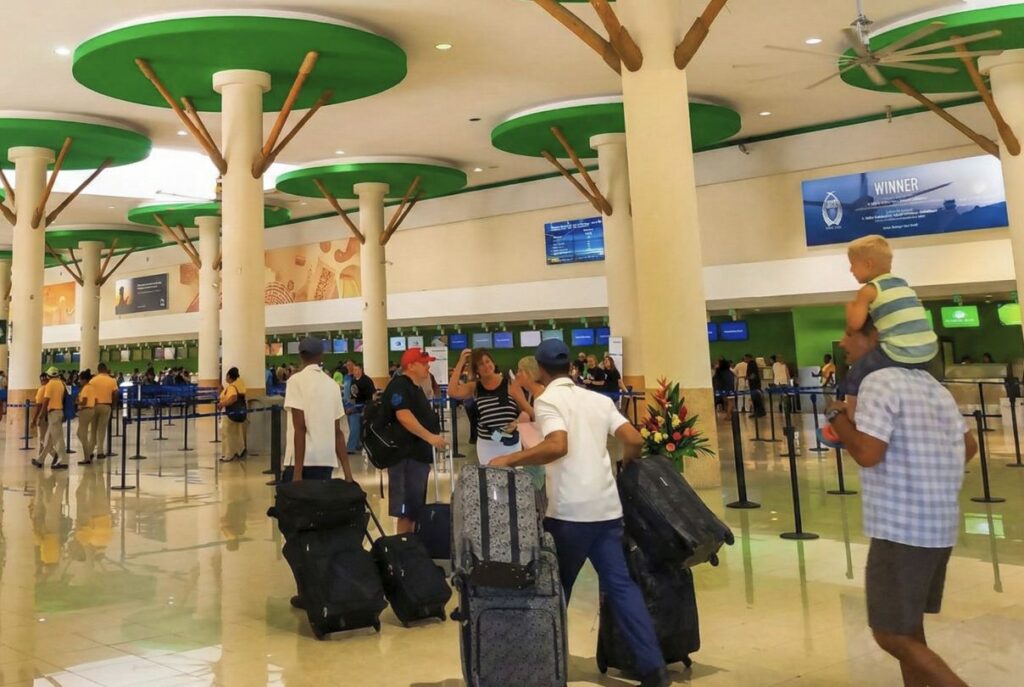
The Dominican Republic has taken the exact opposite approach, earning a reputation among travel analysts as the most frictionless and welcoming international destination in the Western Hemisphere. Instead of making tourists feel like they are being interrogated, the DR has streamlined the entire arrival process into a unified, free digital E-Ticket. You fill it out on your phone before you fly, it bundles your customs and immigration declarations into a single QR code, and you simply scan it and go. Visitors can grab their bags and get to the pool deck faster, experiencing a genuinely welcoming border policy that starts the vacation off right.
Massive Nonstop Flight Connectivity


A tropical destination is only as good as the ease of getting there. Punta Cana International Airport has officially established itself as the busiest and most connected island hub in the entire Caribbean.
The Dominican Republic spent the last few years aggressively securing expanded direct flight routes from the United States, and the strategy is paying off massively. In June, 53% of all flights landing in the country originated directly from the U.S., flooded by major carriers offering competitive nonstop routes from cities that previously required multiple layovers. This massive influx of flights keeps airfares low and accessible, capturing travelers who want a quick, direct flight over a complicated, expensive travel day.
Punta Cana Records
Exploding Modern Cruise Port Infrastructure
While Mexico’s ports are feeling increasingly overrun by aggressive vendors and aging infrastructure, the Dominican Republic has completely revolutionized its maritime entry points. The country brought in an incredible 1,653,129 cruise ship passengers in the first half of the year, showing a 6.3% jump in sea arrivals for June alone.
By building pristine, modern, secure cruise terminals like Taino Bay in Puerto Plata, the DR has created a highly controlled and incredibly welcoming environment for day-trippers. This massive wave of cruise arrivals acts as a direct feeder system for the land-based resort market; when cruise passengers experience the safety, cleanliness, and ease of the country for a day, they frequently return to book a full week-long stay at an all-inclusive property in Punta Cana.
Subscribe to our Latest Posts
Enter your email address to subscribe to Dominican Republic Sun’s latest breaking news affecting travelers, straight to your inbox.